


Introduction
Both independent web designers and agencies can produce professional business websites. However, they usually offer different resources, processes and support arrangements.
An independent web designer in Kuala Lumpur businesses hire may provide direct communication and greater flexibility. An agency may offer broader expertise and more structured project management. Neither option is automatically better. The right choice depends on your project’s scope, complexity, timeline and commercial importance.
This guide compares both options across cost, expertise, communication, capacity and post-launch support. It will help you choose based on project fit.
What Is the Difference Between a Web Designer and an Agency?
An independent web designer usually manages most project activities personally. These activities may include planning, design, development and website launch. Some designers specialise in visual design and collaborate with external developers. Others manage the complete website process independently.
A web design agency uses a team to deliver different project areas. That team may include strategists, designers, developers, writers and SEO specialists. The provider’s label does not guarantee its capabilities. Businesses should confirm who will actually complete each part of the project.
Working With an Independent Web Designer
An independent designer may handle:
- Website planning and strategy.
- Sitemap and wireframe development.
- Visual design.
- Website development.
- CMS configuration.
- Basic SEO setup.
- Testing and launch.
- Post-launch support.
The available services depend on the individual’s skills and experience. Ask which tasks will be completed personally or outsourced.
Direct access can make discussions more efficient. However, availability may depend entirely on one person’s workload.
Working With a Web Design Agency
An agency may provide specialists for strategy, content, design and development. It can also coordinate several workstreams simultaneously. Agency services may include:
- Business and audience research.
- User experience planning.
- Custom visual design.
- Website copywriting.
- CMS and technical development.
- SEO and analytics configuration.
- Quality assurance.
- Website maintenance.
Some agencies also outsource selected work. Ask who will handle each deliverable before approving the proposal.
Compare Project Costs and Overall Value
Independent designers often have lower operating expenses. Their quotations may therefore be lower than agency proposals for similar page counts. Agencies usually charge more because several specialists and management processes are involved. Their fees may also cover testing, documentation and support.
However, price alone does not determine value. A lower quotation may exclude content, SEO, integrations or ongoing maintenance. Compare the complete project scope, including:
- Number of pages and unique layouts.
- Template-based or custom design.
- CMS requirements.
- Interactive features and animations.
- Third-party integrations.
- Copywriting and content entry.
- SEO configuration.
- Testing and launch support.
- Revision rounds.
- Training and documentation.
Separately hiring writers, developers and SEO specialists can increase the final cost. Your internal team may also need to coordinate those providers.
A higher agency quotation may include those services within one process. However, businesses should verify the expertise and seniority of the assigned team.
Identify the Expertise Your Project Requires
A simple informational website may not require a large team. A complex platform may involve several specialised disciplines. List the required skills before approaching providers. This makes proposals easier to compare and reduces unnecessary services.
Design and User Experience
The provider should plan how visitors move through the website. Important information and actions should appear in a logical sequence. Ask whether wireframes will be created before visual design. Wireframes help resolve structural problems before colours and images are applied.
Responsive design should cover desktop, tablet and mobile layouts. Buttons, forms and navigation must remain practical on smaller screens.
Technical Development
Confirm which platforms the provider supports. The recommended platform should reflect your content, functionality and internal capabilities.
Ask how the CMS will be organised. Clear fields and reusable templates make future content updates easier. Complex projects may require CRM systems, payment gateways or custom code. Review the provider’s experience with comparable integrations.
Content, SEO and Analytics
Confirm who will plan and write the website content. Design quality cannot compensate for unclear or incomplete messaging.
Basic SEO setup may include headings, metadata, internal links and redirects. Ongoing keyword research and content production usually require separate services. Analytics should measure important actions, including forms, purchases or bookings. Ask who will configure and test this tracking.
Compare Communication and Project Management
Communication affects timelines, approvals and revision quality. Establish clear expectations before the project begins.
An independent designer usually provides direct access to the person completing the work. Questions and feedback may therefore move quickly. However, communication may pause when the designer faces another deadline or unexpected absence. An alternative contact may not be available.
Agencies often provide a dedicated project or account manager. This person coordinates feedback, milestones and internal team members.
A structured process can support projects involving several stakeholders. However, feedback may pass through more communication layers. Ask either provider:
- Who will be the main contact?
- How often will progress updates be provided?
- Which communication channels will be used?
- When must feedback be submitted?
- Who makes final project decisions?
- How will delays be communicated?
Strong communication depends on actual practices rather than provider size. Assess how clearly each provider responds during the initial enquiry.
Review Availability and Project Capacity
The provider’s capacity must match your preferred timeline. Ask when the project can begin and how much time it will receive.
Independent designers may work efficiently on focused projects. However, design and development may need to happen sequentially.
Larger projects may require the designer to coordinate external specialists. Confirm their availability and responsibilities before signing.
Agencies can distribute work across several team members. Design, content and development may progress simultaneously where appropriate. However, an agency’s team can also be fully booked. Do not assume immediate availability because the business has more employees. Important capacity questions include:
- Who will complete each project stage?
- Which tasks will happen simultaneously?
- How many projects are being managed?
- Who provides backup support?
- Which services will be outsourced?
- How will unexpected delays be handled?
Examine the Website Development Process
Both designers and agencies should follow a clear project process. Flexibility should not mean unclear responsibilities or deliverables.
A typical website project includes:
- Discovery and requirements gathering.
- Sitemap and content planning.
- Wireframing.
- Visual design.
- Website development.
- Content entry or migration.
- Testing and quality assurance.
- Launch and handover.
- Post-launch support.
The proposal should state the required pages, functions and integrations. It should also identify client responsibilities, including content and approvals.
Confirm how many revision rounds are included. Ask what qualifies as one round and how additional revisions are charged.
Scope changes should require written approval. The provider should explain their effect on the budget and timeline before starting them.
Evaluate Testing and Quality Assurance
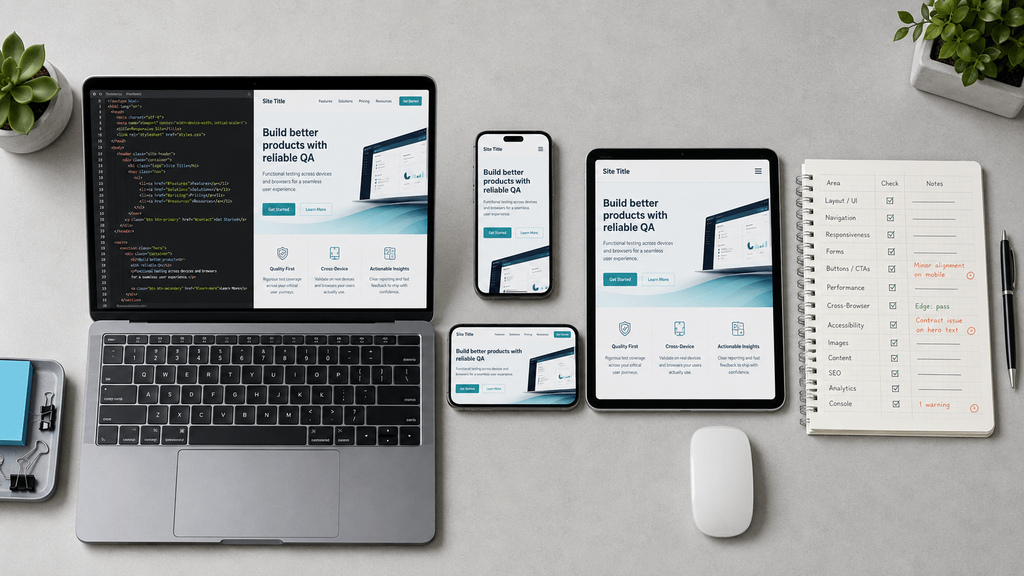
Testing should not depend on whether you hire an individual or agency. Both should confirm that the website functions correctly before launch.
The quality assurance process should cover:
- Responsive layouts on common devices.
- Navigation and internal links.
- Forms and confirmation messages.
- CMS templates and dynamic content.
- Animations and interactions.
- Third-party integrations.
- Page-loading performance.
- Analytics and conversion tracking.
- Metadata and indexing settings.
- Content and formatting accuracy.
Agencies may have dedicated quality assurance specialists. Experienced independent designers may use structured checklists or trusted external reviewers.
Ask who performs the final review. Focus on the actual testing process instead of making assumptions based on team size.
Clarify Website Ownership and Handover
Provider type does not determine website ownership. Contracts and account arrangements establish who controls the finished website.
Your business should retain suitable access to:
- The domain and DNS account.
- Website hosting or platform account.
- CMS administration.
- Design and source files.
- Website content and images.
- Analytics and tracking accounts.
- Premium tools and licences.
- Connected marketing platforms.
Confirm ownership before making the final payment. Avoid keeping important business assets under personal employee or provider accounts.
Handover should include training and clear documentation. Internal users should understand how to complete routine content updates.
Integration details and licence information should also be recorded. This documentation reduces dependence on the original provider.
Compare Post-Launch Support
Websites continue changing after launch. New content, integrations and business requirements can create future technical work.
An independent designer may provide a limited troubleshooting period. Additional support could be charged hourly or through a maintenance agreement.
Future availability may depend on the designer’s workload. Confirm how support requests will be managed before launch.
Agencies may offer structured maintenance packages. These plans can include defined support hours, response times and regular technical reviews.
However, maintenance packages do not always include new functionality. Major development may still require separate quotations.
Ask both providers:
- How long is post-launch support included?
- Which technical problems are covered?
- What response times apply?
- Are content updates included?
- How is urgent support charged?
- What happens when included hours are exceeded?
- Who provides support when the main contact is unavailable?
When Should You Hire a Web Designer Kuala Lumpur Businesses Can Rely On?
An independent designer may suit a focused project with clear requirements. This option can provide direct communication and efficient decision-making.
Consider a designer when:
- The website has a limited scope.
- Required functionality is straightforward.
- Your team can provide finished content.
- One specialist can cover most requirements.
- Direct collaboration is important.
- Your team can manage selected tasks internally.
- The designer has a reliable handover plan.
Review the designer’s live portfolio and technical experience. Also confirm availability for future support.
When Should You Hire a Web Design Agency?
An agency may suit projects requiring several specialist skills. It can coordinate strategy, content, design and development within one process.
Consider an agency when:
- Multiple stakeholders must approve the website.
- Copywriting, SEO and development must work together.
- The website requires advanced integrations.
- Several workstreams must progress simultaneously.
- Formal testing and documentation are essential.
- Ongoing maintenance is required.
- The website plays a critical commercial role.
An agency’s value comes from coordinated expertise and continuity. Its size alone does not guarantee better results.
Red Flags to Watch for With Either Option
Be cautious when either provider:
- Cannot provide relevant live examples.
- Gives a vague quotation.
- Does not identify outsourced work.
- Promises an unrealistic timeline.
- Has no formal revision process.
- Communicates inconsistently.
- Excludes testing from the scope.
- Keeps important accounts under its ownership.
- Provides unclear handover terms.
- Cannot explain post-launch support.
- Pressures you to begin before confirming requirements.
These warning signs can create problems regardless of provider size. Resolve them before signing or paying a deposit.
Choose Based on Project Fit, Not Provider Size
Neither an independent designer nor an agency is always the better option. Your decision should reflect scope, complexity and required expertise.
A skilled web designer in Kuala Lumpur businesses trust can deliver excellent results for focused projects. An agency may better support complex, multi-service websites.
Compare complete deliverables, not just headline prices. Pay particular attention to communication, ownership, testing and long-term support.
Discuss your website requirements with our team. A clear project assessment can identify the most suitable delivery approach for your business.